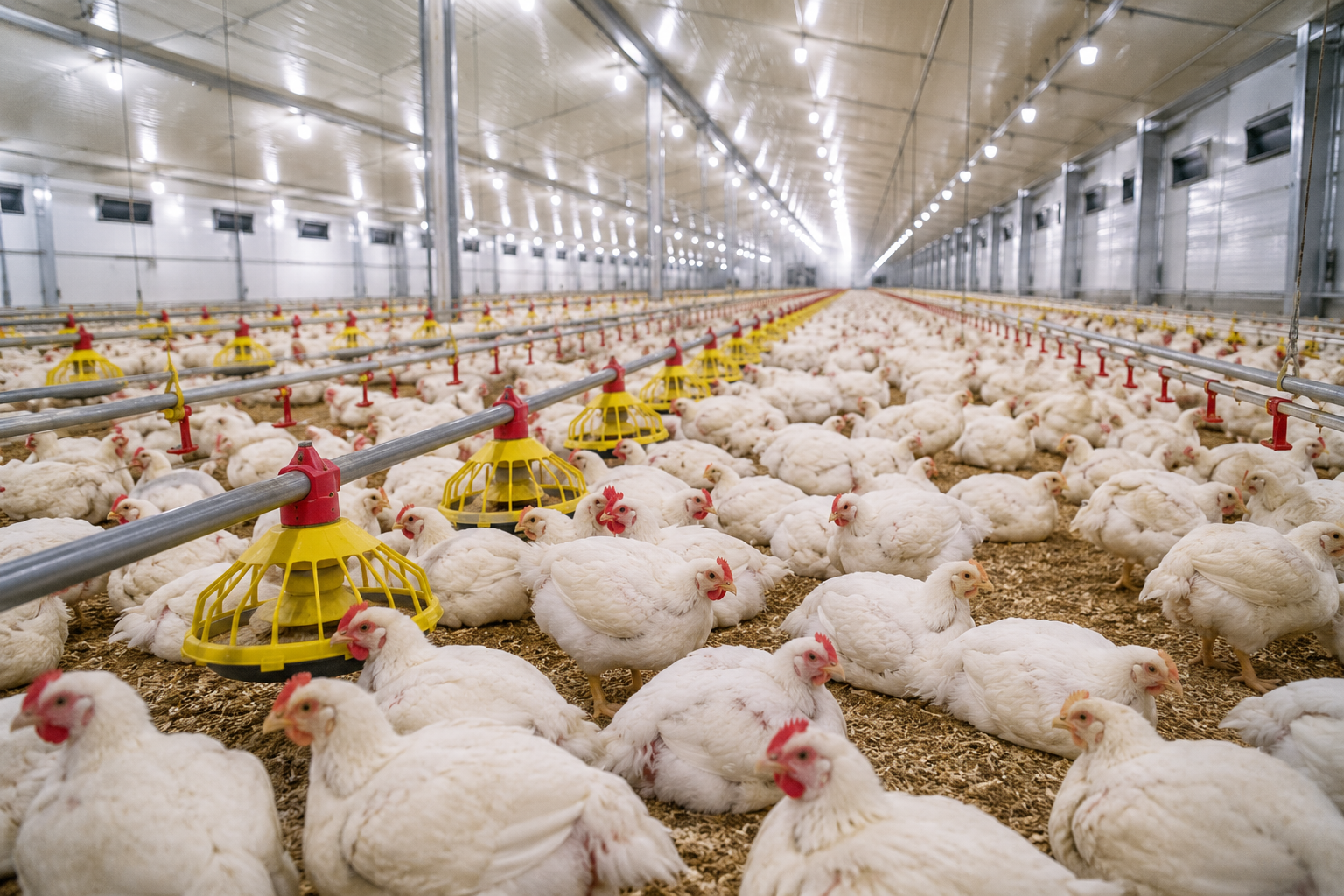
Turkey has firmly established itself as one of the most reliable and cost-competitive origins for halal frozen poultry in global trade. For importers, distributors, and institutional buyers across the Gulf Cooperation Council (GCC) and the broader Middle East and North Africa (MENA) region, Turkish poultry offers a rare combination of certified halal integrity, EU-aligned food safety standards, and geographic proximity that shortens transit times compared to competing origins in South America or Southeast Asia.
This guide is built for B2B buyers — importers, foodservice groups, retail chains, and institutional procurement teams — who need a clear, practical understanding of how the Turkish poultry export supply chain works in 2026, what compliance hurdles to expect, and how to structure a sourcing relationship that protects margins and mitigates risk.
Why Turkey Has Become a Strategic Poultry Sourcing Hub
Turkey's poultry sector has grown into a vertically integrated industry, with major producers controlling everything from breeding stock and feed milling to slaughter, processing, and cold-chain logistics. This vertical integration matters enormously to overseas buyers because it reduces the number of intermediaries between farm and export container, which in turn reduces the risk of quality inconsistency and price volatility.
Several structural factors reinforce Turkey's position as a preferred origin:
1- Geographic advantage: Turkey's location bridges Europe, the Middle East, and Central Asia, allowing shorter sea and land transit times to GCC ports such as Jebel Ali, Jeddah, and Dammam compared to Brazilian or Thai exporters.
2- Halal certification infrastructure: Turkish slaughterhouses have decades of experience meeting the halal requirements of GCC importers, with certification bodies recognized by Gulf food authorities.
3- Competitive feed costs: Domestic grain and soy processing capacity keeps feed costs more stable than in countries reliant entirely on imported feed inputs.
4- EU-aligned hygiene standards: Many Turkish processing plants operate under HACCP and ISO 22000 frameworks, aligning with the documentation GCC customs authorities expect.
5- Government export incentives: Turkish trade policy has actively supported poultry exporters through financing support and trade delegations targeting MENA markets.
For a buyer evaluating new suppliers, these factors translate into fewer surprises at the port of entry and a supply base that can scale with demand growth.
Understanding Halal Certification and Compliance Requirements
Halal compliance is the single most scrutinized element of any poultry import contract into GCC and MENA markets. Buyers should never treat halal certification as a formality — it is a legal gating requirement that determines whether a shipment clears customs at all.
What GCC Authorities Typically Require
Each GCC state maintains its own accredited halal certification bodies, and requirements can shift with little notice. As a baseline, buyers should confirm the following before finalizing any purchase order:
1- The exporting facility holds halal certification from a body recognized by the destination country's food authority (e.g., ESMA in the UAE, SFDA in Saudi Arabia).
2- Certificates are current and match the specific plant and production line used for the order, not just the parent company.
3- Slaughter method documentation (hand-slaughter vs. mechanical, with religious supervision) matches the buyer's contractual and end-market requirements.
4- Packaging carries the correct halal logo, production date, expiry date, and bilingual labeling where required.
Common Compliance Pitfalls
Experienced importers know that most shipment delays stem from documentation mismatches rather than product quality issues. The most frequent errors include mismatched batch numbers between the halal certificate and the commercial invoice, expired certification at the time of vessel departure rather than arrival, and missing veterinary health certificates required alongside halal paperwork. Building a checklist into your procurement workflow — and requiring your supplier to submit documents before, not after, loading — eliminates the majority of these issues.
Product Specifications: What "Frozen Chicken" Actually Covers
"Frozen chicken" is a broad commercial category, and B2B buyers should be precise about specifications when issuing RFQs (Requests for Quotation). Turkish exporters typically offer a full range of cuts and formats, and pricing varies significantly by specification.
Buyers should always request a detailed technical specification sheet (TSS) from any prospective supplier, covering fat content tolerances, weight grading, glaze percentage for IQF products, and packaging dimensions for container optimization.
Logistics and Cold Chain: Managing the Journey from Plant to Port
Poultry is a temperature-sensitive commodity, and the integrity of the cold chain directly affects both food safety and shelf life upon arrival. Turkish exporters shipping to GCC and MENA destinations generally rely on a combination of reefer container sea freight and, for smaller or time-sensitive orders, refrigerated road freight through land border crossings into the Levant.
Key Logistics Considerations for Buyers
1- Transit time: Shipments from Turkish Mediterranean or Black Sea ports to GCC ports typically range from 10 to 18 days depending on routing and transshipment.
2- Temperature monitoring: Reputable exporters provide continuous temperature logging (data loggers) inside containers, which should be a non-negotiable contract term.
3- Container loading standards: Proper palletization and airflow spacing inside reefer containers prevent temperature stratification, which can compromise product at the edges of the load.
4- Port handling infrastructure: Buyers should confirm the destination port has adequate cold storage capacity to avoid demurrage-driven quality degradation during customs clearance delays.
5- Incoterms clarity: Most transactions are structured as CFR or CIF to the destination port, though larger buyers increasingly negotiate DDP terms to shift customs risk onto the supplier.
A well-managed cold chain is often the clearest differentiator between an experienced exporter and one still building institutional capacity — and it is worth auditing directly rather than taking on faith.
Pricing Dynamics and Contract Structuring
Poultry pricing is inherently volatile, driven by global feed grain costs, currency fluctuations in the Turkish lira, seasonal demand spikes (notably around Ramadan and Eid), and freight rate movements. Buyers negotiating supply agreements should build flexibility into contract structures rather than locking into rigid long-term fixed pricing that can become unfavorable to either party.
Common contract structures observed in the Turkey-to-GCC/MENA trade include:
Spot purchase orders: Single-shipment deals priced at the time of order, suited to buyers testing a new supplier relationship.
Rolling quarterly contracts: Volume commitments with pricing reviewed every quarter against a feed-cost index, balancing supply security with pricing fairness.
Annual framework agreements with price bands: Used by larger retail and foodservice groups to lock in supply continuity while allowing pricing to float within an agreed corridor.
Buyers should also factor in Ramadan-period demand surges, which can compress available capacity from top-tier exporters by several weeks; securing allocation commitments ahead of the season is standard practice among experienced importers.
Supplier Vetting: How to Separate Established Exporters from Opportunistic Traders
The Turkish poultry export landscape includes both large, vertically integrated producers and smaller trading intermediaries who source from multiple plants without direct production control. Both models can be legitimate, but they carry different risk profiles.
Due Diligence Checklist for New Suppliers
1- Request direct plant audit access or recent third-party audit reports (BRC, IFS, or equivalent).
2- Verify halal certification directly with the issuing body rather than relying solely on the supplier's documentation.
3- Ask for export track record specific to your destination country, including references from existing GCC or MENA buyers.
4- Confirm production capacity against your required order volumes to avoid over-committed suppliers defaulting on schedules.
5- Clarify whether pricing quoted is FOB from the plant or includes trader margins layered on top of producer pricing.
A supplier's willingness to be transparent on these points is itself a strong signal of reliability — established Turkish exporters are generally accustomed to rigorous GCC buyer due diligence and will not resist it.
Market Outlook for 2026 and Beyond
Demand for halal-certified frozen poultry across GCC and MENA markets continues to be shaped by population growth, rising foodservice consumption, and government food security initiatives that favor diversified import origins rather than dependence on any single supplying country. Turkey's continued investment in processing capacity and export logistics positions it to capture a growing share of this demand, particularly as buyers seek alternatives that combine halal assurance with shorter shipping lanes than South American or Southeast Asian competitors.
For B2B buyers, the practical takeaway is straightforward: origin diversification that includes a well-vetted Turkish supply line can strengthen supply security, provide competitive pricing leverage, and reduce exposure to single-origin disruptions — provided the compliance and logistics fundamentals outlined above are properly managed from the outset.