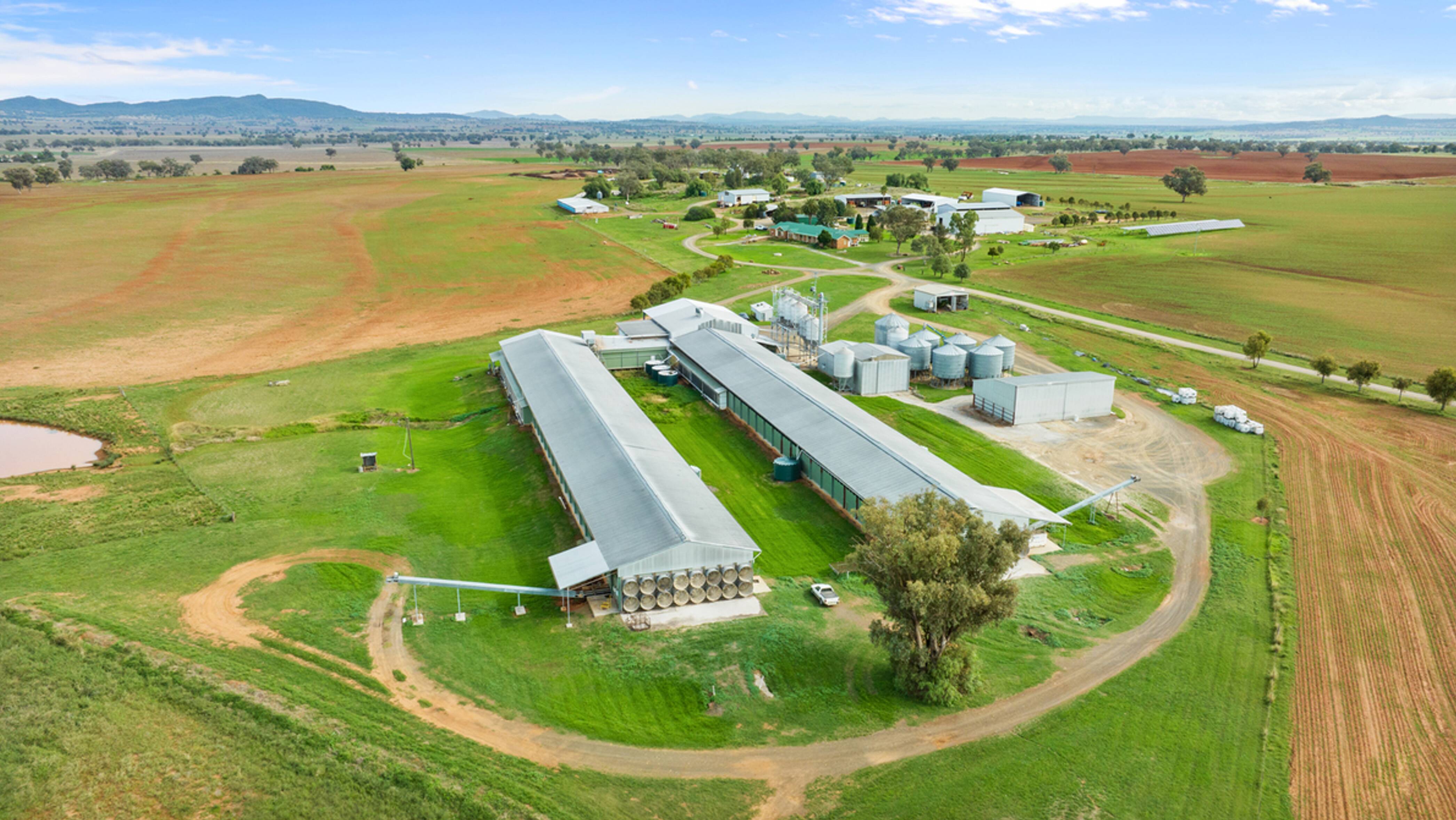
Poultry Farm Investment in Romania: Why the EU's Rising Broiler Hub Deserves Investor Attention in 2026
Poultry is the world's most consumed meat, and Europe cannot produce enough of it. The EU imports significant volumes of chicken every year while consumption keeps climbing, driven by affordability, health trends, and population growth. For investors, that structural gap is the story: a protein market with permanent demand, sitting inside the world's most stable regulatory bloc.
Within that market, one country is quietly becoming the continent's most interesting production base: Romania. This guide explains why poultry farm investment in Romania is attracting international capital, how the model works, and what serious investors should verify before committing.
Why Poultry? The Investment Case Behind the Protein
Before the geography, the fundamentals. Poultry farming stands apart from most agricultural investments for three reasons.
Fast production cycles. A broiler cycle runs roughly six to seven weeks from chick to market weight. That means multiple cycles per year and recurring income throughout the year, instead of the single annual harvest of crop farming. Cash flow arrives in weeks, not seasons.
Inelastic demand. Chicken is the cheapest quality protein available to consumers. When economies boom, people eat more chicken. When economies struggle, people switch from beef to chicken. Demand holds in both directions, which is rare among investable commodities.
Contract-based revenue. Modern broiler production runs on integration: large processing companies contract independent farms to grow birds, supplying chicks, feed, and veterinary support while guaranteeing offtake. The farm owner earns a growing fee per cycle. This structure removes feed price risk and market price risk from the farmer, converting an agricultural operation into something closer to contracted infrastructure.
Our investors already know this model well from our managed poultry operations in Türkiye, where fully managed broiler units generate quarterly income under integrator agreements. Romania applies the same proven model inside the EU single market.
Why Romania? Five Structural Advantages
1. EU single market access
A broiler farm in Romania sells into a market of 450 million consumers with zero tariffs and zero borders. Romanian chicken travels to Germany, France, and Italy as easily as it travels to Bucharest. For investors, EU membership also means EUR-linked revenues, EU legal protections for property and contracts, and eligibility for European agricultural support programmes.
2. A large domestic deficit
Romania itself imports a substantial share of the chicken it consumes. Domestic processors actively seek local production capacity because imported birds cost more in logistics and lose freshness. New, modern farms are absorbed by the market immediately. This is not a market waiting to be created; it is a deficit waiting to be filled.
3. Low production costs
Romania combines some of the EU's lowest agricultural land costs, competitive labour, and strong domestic grain production. Feed is the largest cost in poultry production, and Romania is one of Europe's major grain producers, meaning feed supply is local, abundant, and cheaper to deliver than in import-dependent countries.
4. EU funding and rural development support
Romanian agriculture benefits from EU rural development and modernisation programmes that can co-finance qualifying livestock facilities. While no investment case should depend on grants, the funding environment reduces net capital requirements for eligible projects and signals long-term policy support for the sector.
5. Room to build at scale
Unlike saturated Western European markets where new livestock permits face heavy resistance, Romania has land availability and municipalities that welcome agricultural investment and rural employment. Securing sites, permits, and utility connections for modern farms remains achievable on realistic timelines.
The EU Compliance Factor: A Feature, Not a Burden
Investors sometimes see EU regulation as a cost. In poultry, it is better understood as a moat.
EU broiler production is governed by welfare and food safety standards, including Directive 2007/43/EC, which caps stocking density at 33 kg per square metre, extendable to 39 kg and in exceptional cases 42 kg only where strict welfare, monitoring, and documentation conditions are met. Facilities must be designed, ventilated, and managed to these standards from day one.
Why does this matter to an investor? Three reasons:
- Compliant capacity is scarce capacity. The rules limit how much production can be squeezed from existing buildings, which protects the value of modern, correctly designed farms.
- EU-compliant product commands EU prices. Processors pay for birds they can legally sell across the single market.
- It filters out weak operators. Farms designed around correct EU stocking densities and welfare systems face no retrofit shocks later. Any financial model that assumes higher densities than the directive allows is a red flag, and investors should check this line item in every offer they review.
Serious projects are engineered around these standards from the first drawing. That is exactly the kind of detail that separates institutional-grade agricultural investment from optimistic brochures.
How the Investment Model Works
The structure follows the proven integration model, adapted to the Romanian legal framework:
- Asset ownership. The investor acquires a modern broiler facility, either directly or through a Romanian project company, with registered legal ownership of the land and buildings.
- Professional management. Day-to-day operations, biosecurity, staffing, and cycle management are handled by a professional operating team. The investment is designed to be hands-off.
- Integrator contract. Production runs under agreements with processing companies that supply chicks, feed, and veterinary inputs and take delivery of grown birds each cycle.
- Recurring income. The facility earns a fee per cycle, with several cycles per year, generating regular distributions rather than a single annual return.
The result is an asset-backed, contract-based income stream inside the EU, with the operational risk carried by professionals and the market risk largely absorbed by the integration structure.
What Returns Can Investors Expect?
Honest answer: it depends on facility scale, contract terms, and cycle performance, and any promoter quoting a single guaranteed number should be questioned.
As a general orientation, well-run integrated broiler operations in competitive European markets target net yields meaningfully above prime real estate, with payback periods typically in the range of five to eight years on modern facilities. Our Turkish operations provide a documented reference point for how the managed model performs in practice, with facility-level production data available to investors during due diligence.
For Romanian projects, investors receive facility-specific financial models built on EU-compliant production assumptions, local feed and energy costs, and actual integrator contract terms. We share these models openly, because a model you cannot interrogate is not a model, it is marketing.
Due Diligence Checklist: Six Questions to Ask Any Poultry Offer
- Is the stocking density in the financial model compliant with Directive 2007/43/EC?
- Is there a signed or committed integrator agreement, and what exactly does it guarantee?
- Who operates the farm, and what is their documented track record?
- Are biosecurity and insurance arrangements (including livestock and facility cover) clearly defined?
- Is ownership registered directly in the investor's name or SPV?
- Are the production assumptions (mortality, feed conversion, cycle count) benchmarked against real operating data?
A credible offer answers all six with documents. Ask for them.
Poultry and Solar: The Romanian Portfolio
Investors researching Romania often evaluate agricultural production alongside energy infrastructure. The two complement each other well: poultry delivers operational yield through fast cycles, while solar farm investment in Romania delivers long-duration EUR income from EU-regulated power markets. Both are hard assets, both are professionally operated, and both benefit from Romania's combination of EU membership and emerging-market cost base.
Frequently Asked Questions
Can foreigners own farms in Romania? Yes. EU and non-EU investors can own agricultural facilities through Romanian companies, a standard and well-tested structure.
How much does a broiler farm investment cost in Romania? Costs depend on capacity and land. Modern single-house projects start in the mid six figures in EUR, with detailed facility-specific budgets provided during due diligence.
Is poultry farming in Romania profitable? Romania combines low feed and land costs with EU market prices and a domestic supply deficit, a fundamentally favourable spread. Actual profitability depends on facility design, contract terms, and management quality.
Do I need to manage the farm myself? No. The model is fully managed: professional operators run production, and integrator partners handle inputs and offtake.
What is the biggest risk? Biosecurity and operational execution. Both are mitigated through professional management, insurance, integrator support, and modern facility design. Regulatory compliance risk is eliminated by building to EU standards from day one.
The Bottom Line
Poultry farm investment in Romania sits at the intersection of three durable trends: Europe's protein deficit, Romania's cost advantage, and the EU's regulatory moat around compliant production capacity. For investors who already understand the managed broiler model, Romania is the logical next market: same proven structure, larger single market, EUR-linked income.
The opportunity rewards those who verify. Ask for the integrator terms, the compliance basis, and the operating data. We built our model to survive exactly that scrutiny.
Learn how our managed poultry investment model works → or contact our investment team for details on Romanian project opportunities.