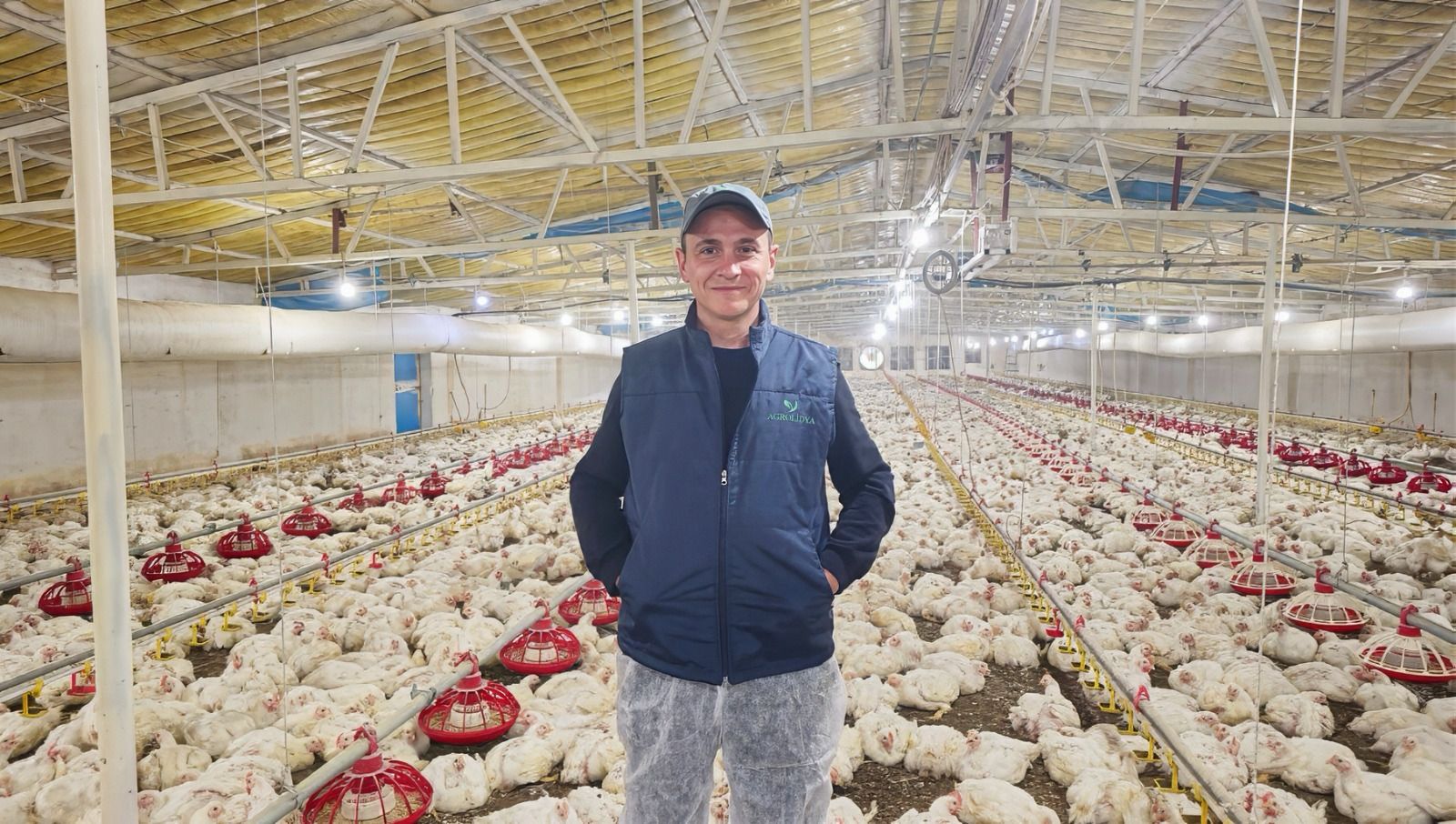
The Complete Poultry Farming Guide: How to Start, Manage, and Profit From a Poultry Farm in 2026
Poultry farming is one of the fastest routes into agribusiness, and one of the most forgiving for those who plan properly. Chicken is the world's most consumed meat, demand never takes a season off, and production cycles are measured in weeks rather than years. Done correctly, a poultry operation generates income faster than almost any other agricultural venture.
Done incorrectly, it burns capital just as fast.
This guide covers everything you need to understand before entering poultry: the production models, housing, feeding, disease prevention, daily management, and the real economics. It also covers something most guides skip entirely: the choice between running a farm yourself and owning one that professionals run for you. Both are legitimate paths, and by the end you will know which one fits your goals.
What Is Poultry Farming?
Poultry farming is the raising of domesticated birds, primarily chickens, for meat or eggs. The two dominant production systems worldwide are:
- Broiler farming: raising fast-growing birds for meat, with each flock reaching market weight in roughly six to seven weeks
- Layer farming: raising hens for egg production, with income spread over long laying periods
Broilers offer faster cash turnover and simpler logistics, which is why broiler production dominates commercial poultry and is the model used across professional integrated farming in Europe. Layers suit producers targeting steady egg sales over many months. This guide focuses primarily on broilers, the model most relevant to commercial operators and investors.
Why Poultry Is a Smart Agribusiness
Four fundamentals make poultry attractive compared with other farm ventures:
- Speed. A broiler cycle completes in under two months. Several cycles run per year, meaning income arrives repeatedly rather than once at harvest.
- Demand. Chicken is the cheapest quality protein on the market. Consumption grows in good economies and grows even faster in difficult ones, as consumers switch down from beef.
- Scalability. Production expands house by house. A well-run single house can fund the second.
- Predictability. With modern genetics, controlled housing, and correct feeding, output is remarkably consistent flock after flock.
The catch: these advantages only materialise with professional execution. Poultry rewards discipline and punishes improvisation, which is why the rest of this guide matters.
Step 1: Choose Your Production Model
Before any money moves, decide how you will operate. There are three realistic paths.
Independent farming
You buy chicks, buy feed, raise birds, and sell them yourself. You keep the full margin and carry the full risk: feed prices (60 to 70 percent of production cost), market prices at sale, and finding buyers cycle after cycle. This model suits experienced operators with strong local market relationships.
Contract (integrated) farming
You own the facility; a large processing company supplies chicks, feed, and veterinary support, then collects the grown birds and pays you a growing fee per cycle. Feed risk and market risk sit with the integrator. This is the dominant model in professional poultry across Europe, and we explain its mechanics in detail in our guide to the integration model.
Managed ownership (the investor route)
You own the farm as an asset, and a professional operating team runs it under an integration agreement. You receive the income without managing daily operations. This is the model we operate at Agrolidya, and it exists precisely because most people who want poultry income do not want a second full-time job. If that describes you, the operational chapters below still matter: they are your due diligence checklist for judging whether an operator knows what they are doing.
Step 2: Build a Real Business Plan
Every failed poultry venture we have seen shares one trait: the plan was a guess. Before starting, put numbers on paper for:
- Flock size and target market weight
- Housing construction or acquisition cost
- Equipment: feeding lines, drinkers, ventilation, heating
- Feed cost per cycle (independent model) or fee structure (contract model)
- Utilities, labour, litter, and veterinary costs
- Working capital for at least two full cycles
- Realistic revenue per cycle and break-even timeline
A useful discipline: model your first year at 10 percent worse performance than your best-case assumptions. If the project only works in the best case, it does not work.
Step 3: Get Housing Right (This Decides Everything)
Poultry housing is not a shed with chickens in it. It is a climate-controlled production environment, and its quality determines growth rates, feed efficiency, mortality, and ultimately profit. Modern broiler housing requires:
- Ventilation: precise airflow control to manage temperature, humidity, and ammonia. Poor ventilation is the single most common cause of underperforming farms.
- Heating and insulation: chicks need 32 to 34 degrees in their first days. Poorly insulated houses burn profit as heating fuel.
- Stocking density: overcrowding stresses birds, slows growth, and in the EU is regulated by law. Directive 2007/43/EC caps density at 33 kg per square metre, extendable to 39 kg and exceptionally 42 kg only under strict welfare and monitoring conditions. Design to the rules from day one.
- Water systems: clean water, always available, through nipple drinker lines.
- Biosecurity layout: controlled entry, disinfection points, and separation from other farms and wild birds.
An investor evaluating an existing facility should ask for the ventilation specification, insulation values, and the stocking density used in the financial model before anything else.
Step 4: Source Healthy Birds
Flock quality is set on day one. Chicks must come from certified hatcheries with documented breeder health. Strong day-old chicks are active, dry, bright-eyed, and uniform in size. Weak or uneven chicks never fully recover, and early mortality is profit lost before the cycle begins.
In the integrated model this risk is largely absorbed by the integrator, who supplies chicks from its own hatchery network and has every incentive to deliver quality: the birds return to them at the end of the cycle.
Step 5: Feed Correctly
Feed is the largest cost and the biggest performance lever in poultry. The essentials:
- Phase feeding. Starter, grower, and finisher feeds match the bird's changing nutritional needs. Feeding one ration throughout wastes money and growth.
- Feed conversion ratio (FCR). The kilograms of feed needed per kilogram of live weight. Modern broilers achieve FCRs around 1.5 to 1.7 in well-run houses. Every 0.1 improvement in FCR translates directly into margin.
- Clean water. Birds drink roughly twice as much as they eat. Contaminated water lines quietly destroy performance.
- Storage. Feed kept dry and pest-free, used fresh.
In contract farming, the integrator supplies feed at its own cost, which converts the farm's biggest cost risk into the integrator's problem. The farm's job becomes achieving the best possible FCR, which the fee formula rewards.
Step 6: Protect the Flock (Biosecurity and Health)
Disease is the existential risk in poultry. One outbreak can erase a cycle; a serious one can close a farm. Non-negotiable practices:
- Strict visitor control and dedicated footwear and clothing
- Full cleaning and disinfection between flocks, with a sanitary break
- Vaccination programs designed by a poultry veterinarian
- Rodent, insect, and wild bird control
- Daily observation: appetite, activity, droppings, respiratory sounds
- Immediate isolation and investigation of unusual mortality
Professional operations treat biosecurity as a system, not a habit. Insurance, including livestock cover, provides the financial backstop, and it is a standard component of the managed investment structures we offer.
Step 7: Manage Daily and Measure Everything
Successful poultry farming is a routine executed well: feed and water checks, climate monitoring, litter management, mortality recording, and weight sampling. The farms that outperform are the ones that record everything, because data reveals problems days before they become visible in the flock.
Key metrics every operation should track per cycle: mortality percentage, average daily gain, FCR, final live weight, and the European Production Efficiency Factor (EPEF), the industry's combined performance score. When an operator shows you these numbers across past cycles without hesitation, you are talking to a professional. When they cannot, walk away.
The Economics: Is Poultry Farming Profitable?
Yes, when three conditions hold: professional management, correct facility design, and a secured sales channel. The profitable poultry farm is not the one with the cheapest construction; it is the one with the best FCR, lowest mortality, and no gaps between flocks.
Under the European integration model, income arrives as a growing fee several times per year, with feed and market risk carried by the processor. Payback periods on modern facilities typically run five to eight years depending on scale, contract terms, and country, with the asset producing for decades. For the specific economics of the EU's most cost-competitive market, see our guide to poultry farm investment in Romania.
Common Mistakes That Kill Poultry Ventures
- Starting too big before mastering one house
- Cutting costs on ventilation and insulation, then paying for it every cycle, forever
- Building financial models on stocking densities the law does not allow
- Buying chicks from uncertified sources to save pennies
- Treating biosecurity as optional until the first outbreak
- Having no committed buyer before the first flock arrives
- Keeping no records and flying blind
Every one of these is avoidable with planning, and every one appears constantly in failed projects.
Two Paths Forward: Operate or Own
If you have read this far, you now understand what running a poultry farm actually involves. From here there are two honest paths.
Path one: become an operator. Start with a single house, learn every cycle, keep records, build integrator relationships, and scale with experience. It is demanding, skilled work, and for hands-on farmers it builds a genuine business.
Path two: become an owner. If you want the income and the asset without the daily operation, the managed model exists for exactly that. You own the facility, professionals with documented track records run it under integration agreements, and you receive distributions with full production reporting. This is the structure behind our managed poultry farm investments, operating today in Türkiye and expanding into Romania's EU market.
Both paths lead to the same fundamentals covered in this guide. The only question is whose hands are on the equipment.
Frequently Asked Questions
How much does it cost to start a poultry farm? Small independent operations start in the low tens of thousands of euros; modern commercial broiler houses run into the hundreds of thousands depending on capacity and country. Managed investment entry points vary by project and are quoted with full facility-level budgets.
How long until a poultry farm makes money? Broiler cycles complete in six to seven weeks, so revenue begins within the first two months of operation. Full capital payback on modern commercial facilities typically takes five to eight years.
Is poultry farming profitable for beginners? It can be, but the learning curve is real and mistakes are expensive. Beginners should either start small and learn deliberately, or enter through managed structures where experienced operators carry the execution.
Broiler or layer: which is better? Broilers offer faster cycles and simpler sales through integrators; layers offer steady egg income over longer periods. Commercial investment structures in Europe are overwhelmingly built on broilers.
What is the biggest risk in poultry farming? Disease, followed by poor facility design. Both are managed through biosecurity systems, professional operation, correct engineering, and insurance.
Final Word
Poultry farming rewards those who respect it as a professional production business rather than a shortcut to easy income. Master the fundamentals in this guide, or partner with people who already have, and it becomes one of agriculture's most reliable engines of recurring income.
Explore our managed poultry farm investment model → to see how facility ownership, professional operation, and integrator contracts combine into a fully hands-off agricultural asset.
Written by Tamer Yaşar, Founder & CEO of Agrolidya Global Holdings Ltd. Agrolidya operates in the United Kingdom and Türkiye through Agrolidya Global Holdings Ltd (England and Wales) and Agrolidya Tarım A.Ş. (Türkiye). This article is for information purposes only and does not constitute investment advice.