Solar Farm vs Buy-to-Let Property: Where Should International Investors Put Their Capital in 2026?
For decades, buy-to-let property has been the default answer for investors seeking passive income from a tangible asset. Buy a flat, find a tenant, collect the rent. Simple, familiar, and backed by bricks and mortar.
But the numbers behind that model have changed. Rental yields in prime European cities have compressed, regulation has tightened, taxes on landlords have increased, and the "passive" part of property income has quietly disappeared under a pile of maintenance calls, void periods, and compliance paperwork.
Meanwhile, a different type of income-producing hard asset has matured: the utility-scale solar farm. Same core logic as property, meaning a physical asset that produces recurring income, but with a very different yield, cost, and management profile.
This article puts the two side by side with real numbers, so you can judge where a serious allocation performs better in 2026.
The Yield Comparison: What the Numbers Actually Say
Start with the headline figure every investor checks first.
Buy-to-let in prime European markets. Gross rental yields in cities like London sit around 3 to 5 percent. After service charges, maintenance, insurance, void periods, letting agent fees, and landlord taxes, net yields of 2 to 3.5 percent are common. In many prime central districts, net yields fall below 2.5 percent, with investors relying on capital appreciation to justify the position.
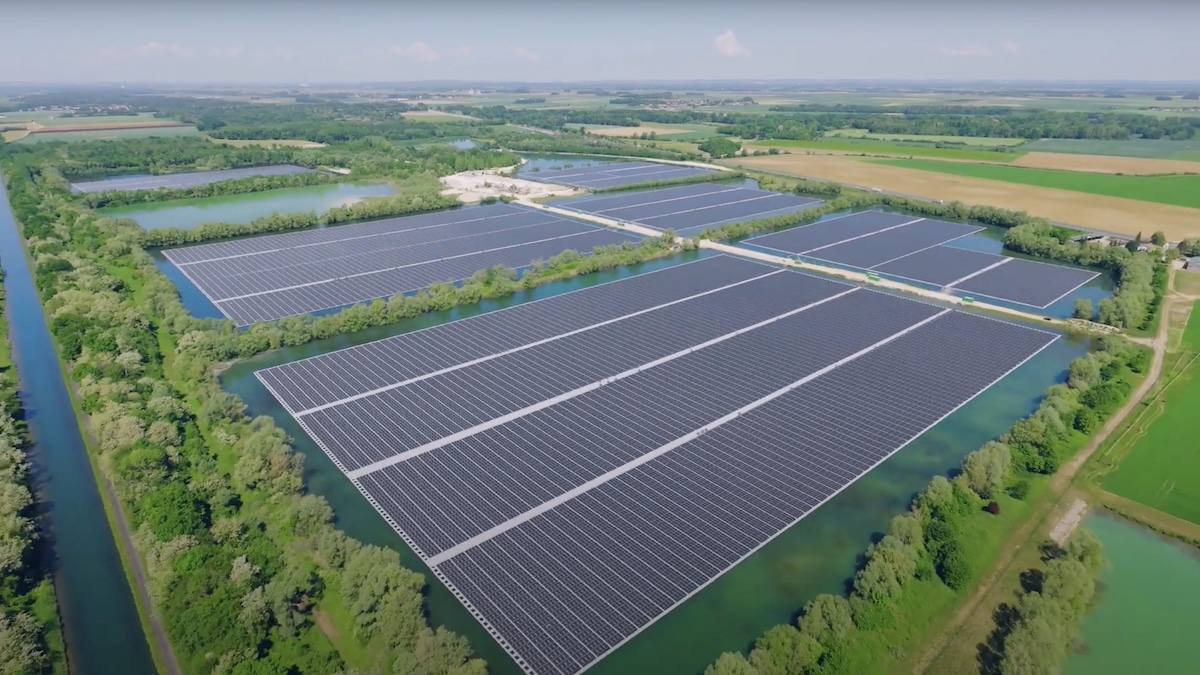
Solar farm investment in Romania. A grid-ready 4.9 MWp reference project in Brașov county produces approximately 6.83 GWh per year, verified by on-site solar measurement. At current market tariffs of €0.075 to €0.080 per kWh, that generates net annual income of roughly €463,000 to €497,000 on a total turnkey investment of about €3.3 million. That is a net yield of approximately 14 to 15 percent, with payback from around 6.7 years on an asset engineered to run for more than 30 years.
Even under a conservative tariff scenario of €0.065 per kWh, the net yield stays near 12 percent. That is roughly four to five times the net income of a prime-city rental portfolio of the same size.
Yield is not the whole story, of course. So let's look at everything else.
Tenants vs Sunlight: The Income Reliability Question
A rental property has one customer at a time. If that tenant leaves, stops paying, or damages the property, income stops while costs continue. Landlords price this in as void risk, and in many markets eviction processes have become slower and more expensive.
A solar farm sells into an entire national electricity market. In Romania, electricity is traded through OPCOM, the national power market operator, within the EU-regulated framework. There is no single counterparty who can leave. Demand for electricity is structural and growing, driven by electrification and data centre expansion across Europe.
One honest caveat: solar income in Romania today is merchant income, meaning it moves with market prices. There is currently no state purchase guarantee, although Romania is developing a Contract for Difference (CfD) framework for fixed-price contracts. Property rent is contractual per tenant; solar revenue is market-based per kWh. Both carry income variability, just of different kinds. The difference is that a solar plant never has a void month: the sun does not hand in notice.
The Management Reality: How Passive Is Passive?
Ask any landlord how passive their portfolio really is.
Buy-to-let involves tenant sourcing, referencing, deposits, inventory checks, repairs, boiler breakdowns, compliance certificates, insurance renewals, and, increasingly, licensing schemes. A letting agent absorbs some of this for 10 to 15 percent of the rent, but the owner remains legally responsible and operationally involved.
A solar farm runs on an O&M (operation and maintenance) contract. A specialist contractor handles monitoring, panel cleaning, repairs, grid administration, and market sales for a fixed annual fee already reflected in the net income figures above. The investor's involvement is reading a monthly production report. There are no tenants, no midnight phone calls, and no furniture.
For investors managing capital across borders, this difference is decisive. A solar SPV in Romania can be owned and monitored entirely remotely, with no residency requirement and no need to ever change a lock.
Entry Costs, Taxes, and Friction
Property transactions in prime markets carry heavy friction. In the UK, an overseas buyer of an additional residential property faces stamp duty that can exceed 10 percent of the purchase price at the top bands, plus legal fees, and later capital gains tax and inheritance tax exposure. Annual costs continue regardless of occupancy.
A solar investment is structured as the acquisition of a project company (SPV) holding the land lease, permits, grid connection agreement, and engineering. Transaction friction is materially lower, and the operating cost base is dominated by a fixed land lease of around €2,000 per hectare per year. There is no equivalent of a 10 percent stamp duty on entry.
Tax treatment always depends on the investor's residence and structure, and professional advice is essential in both cases. But on pure entry friction, solar starts several points ahead before the first euro of income arrives.
Capital Appreciation vs Capital Recovery
Property investors traditionally accept low yields because they expect the asset to appreciate. That bet has worked over long horizons in supply-constrained cities, but it is exactly that: a bet on future buyers, sensitive to interest rates, tax policy, and market cycles. Meanwhile the capital stays locked in the asset.
Solar works on the opposite principle: capital recovery through income. With payback from roughly 6.7 years, the plant returns its full investment cost within the first quarter of its operating life. Everything after that is income on recovered capital, for two decades or more. The asset itself depreciates slowly (modern panels lose under 0.5 percent of output per year) and the underlying rights, meaning the grid connection and permitted site, can hold significant resale value in a market where grid capacity is the scarcest resource.
One model relies on selling the asset to realise the return. The other pays the return out in cash while you still own the asset.
Scarcity: Flats Are Built Every Year. Grid Connections Are Not.
Here is the structural point most comparisons miss.
New apartments are supplied to the market continuously; every crane on the skyline is future competition for your rental flat. Grid-ready solar projects are the opposite. In every European market, the bottleneck is not land or panels but grid connection capacity. A project that already holds a signed grid connection agreement, a building permit, and completed engineering represents scarce, difficult-to-replicate infrastructure rights.
This is why experienced energy investors pay a premium for ready-to-build projects rather than starting development from zero, which can take three to five years with no guarantee of a grid slot at the end. For a detailed breakdown of what a turnkey project includes and what it costs per MWp, see our complete guide to solar farm investment in Romania.
The Risk Table, Honestly Stated
No serious comparison hides the downsides, so here they are on both sides.
Buy-to-let risks: tenant default and voids, regulatory tightening on landlords, rising interest costs on leveraged purchases, transaction taxes, illiquidity in downturns, and concentration risk in a single unit and postcode.
Solar farm risks: electricity price fluctuation on the merchant market, weather variation between years, construction execution, and regulatory evolution. Mitigations include conservative tariff modelling, measured production data rather than estimates, fixed-price turnkey EPC contracts, battery storage to capture higher-priced hours, and the EU legal framework governing Romanian energy markets.
Neither asset is risk-free. The question is which risks you are paid to carry. At a net yield of 14 to 15 percent against 2 to 3.5 percent, solar pays its investor a substantially larger premium for a risk set that is, arguably, more diversified than a single tenant in a single flat.
Portfolio Logic: This Is Not Either/Or
For most international investors, the intelligent answer is allocation, not replacement. Property offers familiarity, leverage options, and personal utility. Solar offers yield, genuine passivity, and EUR income from EU-regulated infrastructure. Agricultural production assets such as managed poultry farm investment add a third profile, with operational yields and shorter cycles.
A portfolio holding prime property for stability, solar for income, and agricultural production for operational yield is diversified across three different economic engines: housing demand, electricity demand, and food demand. All three are hard assets. Only one of them requires you to care about a broken dishwasher.
Frequently Asked Questions
Is a solar farm safer than buy-to-let property? They carry different risks. Property carries tenant, regulatory, and liquidity risk with low net yields. Solar carries market price and production risk with substantially higher net yields. Diversified investors often hold both.
Can I invest in a solar farm remotely? Yes. Ownership is structured through a Romanian project company (SPV) that can be held by foreign individuals or companies, with operations managed under O&M contracts. No residency or relocation is required.
What budget do I need to enter solar compared to property? Entry-level grid-ready projects start around 1 MWp, with indicative turnkey costs from roughly €700,000, which is comparable to a single prime-city apartment but with several times the net income.
Does a solar farm hold resale value like property? An operating plant with a grid connection and long-term land lease is a sellable infrastructure asset. Grid capacity scarcity across Europe supports the value of permitted, connected projects.
The Bottom Line
Buy-to-let built a generation of wealth, but its economics in 2026 rest on thin yields and hoped-for appreciation, wrapped in growing regulation. Solar farm investment offers what property originally promised: a tangible asset, professionally managed, paying out real income, at net yields the rental market has not seen in decades.
The capital question for 2026 is not whether hard assets make sense. It is which hard asset pays you properly for owning it.
Explore available solar projects in Romania → or contact our investment team for full documentation, measured production reports, and financial models of current listings.