Is Olive Farming Profitable The 2025 Ultimate Investor Guide to ROI, Tree Longevity and the Sacred Power of the Olive Tree
Olive farming is not just profitable. It is one of the most stable, drought resistant, long lived, and historically proven agricultural investments in the world. When modern investors ask “Is olive farming profitable?”, they are often surprised to learn that olive farms are not only financially strong but also tied to one of humanity’s oldest and most respected crops.
The olive tree is a symbol of life, prosperity, peace and abundance. It appears in ancient civilizations, world literature, historical records, and even in religious texts including the Quran, the Bible, and the Torah. It is repeatedly described as a blessed tree, a sacred tree, and a tree of light.
And while its spiritual and historical value is extraordinary, its economic and agricultural value is just as impressive.
This guide will show you—through history, agriculture, economics, and real investor data—why olive farming remains one of the most profitable and safest investments on earth.
1. The Olive Tree Is One of the Most Drought Resistant Crops in the World
Climate change has made many agricultural investments risky. Water scarcity is now the biggest challenge for global farming.
But olive trees are different.
They can survive:
long dry summers
minimal rainfall
poor soil
rocky and mountainous terrain
extreme heat
Olive trees naturally evolved in the Mediterranean, where summers are dry and winters are mild. Over thousands of years, they developed deep root systems that access underground moisture, making them one of the most drought tolerant commercial crops.
This means:
✔ lower irrigation costs
✔ lower operational risk
✔ stability even in climate-challenged regions
✔ consistent fruiting even during dry years
For investors, this translates into reliable annual income—even when other crops fail.
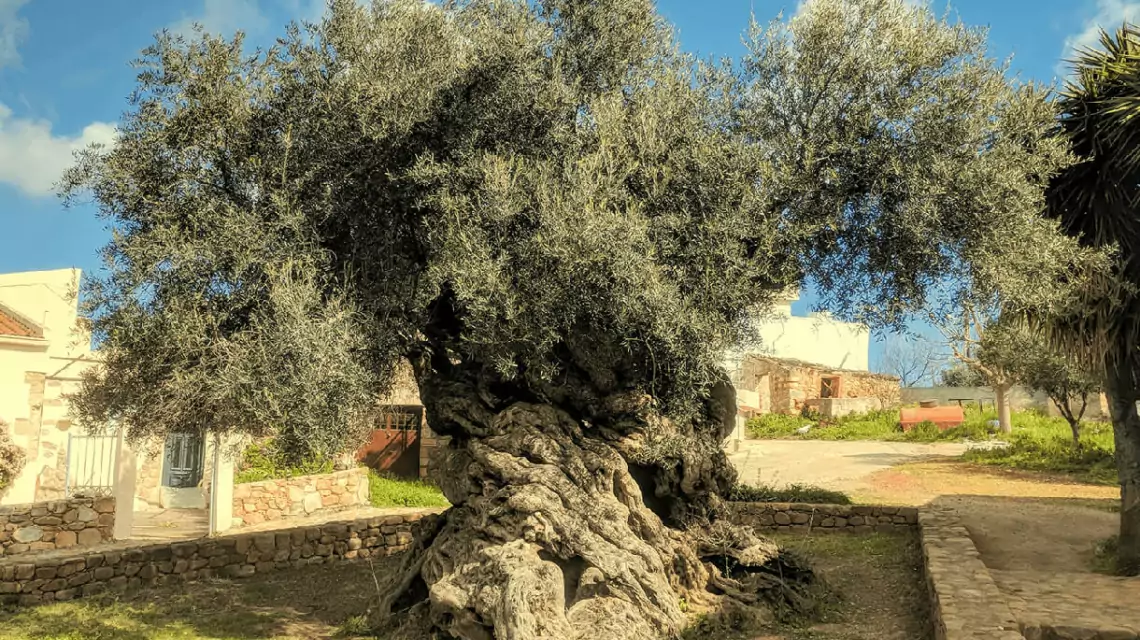
2. Some Olive Trees Are Over 1500 Years Old and Still Producing Income
You read that correctly.
There are olive trees documented in the Guinness World Records that are:
1500+ years old
still alive
still producing olives
still economically valuable
A few famous examples:
-
The Vouves Olive Tree in Crete: estimated 2000–3000 years old
-
The Al Badawi Olive Tree in Palestine: around 4000 years old (one of the oldest trees on earth)
-
Ancient olive groves in Turkey, Italy and Spain: many between 1000–2000 years old
No other fruit-bearing tree offers this level of longevity.
For investors, this is more than fascinating—it's financially important:
An olive tree is a multi-generational asset
It continues producing for centuries
The land value increases drastically over time
Olive trees are literally lifetime income generators.
3. The Olive Tree Is a Sacred Tree Mentioned in the Quran and Other Holy Books
In the Quran, the olive tree (زيتون / zaytun) is mentioned multiple times as a blessed tree, a source of light, and a symbol of divine creation.
For example:
Surah An-Nur (24:35)
"Allah is the Light of the heavens and the earth… whose oil would almost glow even if untouched by fire — light upon light."
Scholars widely agree:
This verse refers to the olive tree.
It is also mentioned in:
Surah Al-Mu’minun
Surah At-Tin
Surah An-Nahl
In Surah At-Tin, Allah swears an oath by the olive:
"By the fig and the olive…"
In holy texts, when God swears by something, it signifies immense importance.
The Bible and Torah also reference the olive tree countless times as a symbol of peace, blessing, abundance and covenant.
For investors, this does not change profit margins—
but it creates emotional value, heritage value, and brand value, especially when selling boutique olive oil to premium global markets.
4. Is Olive Farming Profitable Financially? Yes—And More Than Most Crops
Olive farming can produce high, stable and long term returns when managed professionally.
Below is a summary of profitability per acre:
Traditional Olive Farming Profit
Yield: 400–800 kg olives per acre
Oil production: 25–50 liters
Annual profit: 300–800 USD
High Density Olive Farming Profit (Most Common Today)
Yield: 2000–4000 kg olives per acre
Oil production: 250–500 liters
Annual profit: 1500–3500 USD
Super High Density Profit (Industrial Level)
Yield: 4000–7000 kg olives per acre
Oil production: 600–900 liters
Annual profit: 3500–6000 USD
5. Global Olive Oil Prices Are Increasing Every Year
Due to:
rising health awareness
declining production in Spain, Italy and Greece
global shift toward Mediterranean diet
shortage of premium olive oil
climate change affecting competitors
olive oil prices have jumped significantly worldwide.
Between 2022 and 2024, global wholesale prices increased up to 100 percent in many markets.
This means:
✔ rising revenue
✔ rising land value
✔ rising ROI
✔ more investor demand for olive farmland
Olive oil is essentially becoming the “liquid gold” it has been symbolically called for centuries.
6. The Olive Oil Market Is One of the Fastest Growing Health Industries
Olive oil demand is booming due to:
anti-inflammatory benefits
heart health
low cholesterol
rich antioxidants
polyphenols
beauty industry uses
gourmet cooking demand
In the U.S. alone, olive oil consumption grew 400 percent in 30 years.
And yet global supply is not increasing at the same rate.
This creates a long-term supply deficit, which pushes prices higher and strengthens profitability for olive farmland investors.
7. Low Maintenance and Low Operating Costs
Compared to other fruit trees, olive trees require:
minimal water
minimal fertiliser
minimal pruning
minimal pest treatment
minimal labour
They are incredibly resilient, with fewer diseases and lower maintenance requirements.
For investors, this means:
low risk
low annual expenses
higher net profit margins
8. High Return on Investment (ROI) for Agricultural Investors
When correctly managed, olive farming offers:
✔ ROI of 10–20 percent annually
✔ Land value appreciation 7–12 percent per year
✔ Passive income for 50–100+ years
✔ Extremely low failure rate
This is why olive farmland is becoming one of the top agricultural investment categories among investors from:
USA
UK
GCC
Europe
Asia
Turkey in particular has become one of the most attractive countries to invest in olive farms due to its climate, soil quality, low land price, and global strategic location.
9. Why Turkey Is One of the Best Countries for Olive Farming Investment
Turkey offers:
top quality olive varieties (Gemlik, Memecik, Ayvalik)
40 percent lower land prices than Europe
perfect climate
experienced labour
advanced olive oil production technology
high global demand for Turkish olive oil
low entry cost, high ROI
With companies like Agrolidya providing:
fully managed farms
turnkey investment models
high density planting
annual reporting
harvesting and production services
…investors can earn purely passive income while owning a high-value agricultural asset.
10. Conclusion: Olive Farming Is Spiritually, Historically and Financially One of the Best Investments in the World
To summarize:
✔ Olive farming is profitable
✔ Olive trees are drought resistant
✔ Some olive trees are 1500+ years old and still producing
✔ Olive trees are mentioned in the Quran, Bible, Torah as sacred
✔ Olive oil demand is rising globally
✔ Olive farms offer high ROI and low risk
✔ It is one of the few investments that grows in value for centuries
Few investments in the world offer:
economic value
historical depth
religious significance
cultural heritage
scientific resilience
multi-generational sustainability
…all at the same time.
The olive tree does.
And that is why olive farming is not just profitable—it is one of the most meaningful and enduring investments a person can make.