Contract Broiler Farming in Romania: How the Integration Model Turns a Farm Into an Income Machine
Most people picture a poultry farmer as someone who buys chicks, buys feed, raises birds, and then hopes to sell them at a good price. That farmer carries every risk in the chain: feed costs, disease, market prices, and finding a buyer at the right moment.
Modern broiler production does not work that way. Across Europe, and increasingly in Romania, the industry runs on a structure called integration, and understanding it is the single most important thing an investor can do before putting money into poultry. Because integration is precisely what transforms a farm from an agricultural gamble into a contracted, cash-flowing asset.
This article explains how the model works, who does what, how the money flows, and where the risks really sit. It is the operational companion to our complete guide to poultry farm investment in Romania.
What Is the Integration Model?
Integration is a division of labour between two parties.
The integrator is a large poultry processing company. It owns hatcheries, feed mills, slaughterhouses, and distribution networks. It has supermarket contracts to fill and needs a constant, predictable supply of grown birds every single week of the year.
The farm owner provides the growing capacity: a modern, climate-controlled broiler house with the equipment and conditions to raise chicks to market weight.
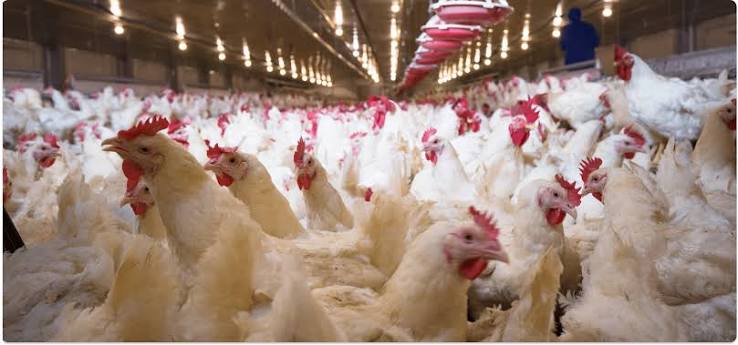
Under an integration agreement, the integrator supplies day-old chicks, all feed, veterinary support, and technical supervision. The farm grows the birds for roughly six to seven weeks. The integrator then collects the flock for processing and pays the farm a growing fee based on the number and quality of birds delivered.
Then the house is cleaned, sanitised, and the next flock arrives. The cycle repeats several times per year, every year.
Why Integrators Need Farm Owners
A fair question: if integrators are so large, why don't they build all the farms themselves?
Because capital allocation. A processing company's returns come from processing, branding, and distribution, not from owning thousands of buildings. Tying billions of euros into real estate would starve their core business of capital. So the industry evolved a standard structure worldwide: integrators concentrate on the supply chain, and independent owners provide the growing capacity under long-term contracts.
This is why demand for modern, compliant broiler houses is structural. In Romania specifically, processors face a domestic production deficit and actively seek new contracted capacity, as we covered in the market analysis of our first Romania guide.
Follow the Money: How a Farm Owner Earns
Here is the flow of a single cycle under integration:
- Placement. The integrator delivers day-old chicks to the farm at its own cost.
- Growing period. For six to seven weeks, the integrator supplies all feed (the largest cost in poultry, fully off the farm's books) plus veterinary care and technical guidance. The farm provides housing, climate control, water, energy, labour, and daily management.
- Collection. The integrator collects the grown birds and weighs the flock.
- Settlement. The farm receives its growing fee, typically calculated on kilograms of live weight delivered, adjusted for performance indicators such as feed conversion and mortality.
- Turnaround. Cleaning, disinfection, and a sanitary break, then the next placement.
The farm owner's income is therefore a service fee, not a commodity sale. Whether chicken prices in the supermarket rise or fall next month is the integrator's concern. Whether grain prices spike is the integrator's concern. The farm is paid for growing performance, which is exactly the variable that professional management controls.
What the Model Removes From the Investor's Risk Table
Compare the two risk profiles directly.
Independent farming risks: feed price volatility (60 to 70 percent of production cost), market price at sale, finding buyers, chick quality and sourcing, veterinary costs, and working capital tied up in each flock.
Integrated farming risks that remain: operational execution (achieving good growth results), biosecurity, facility condition, energy costs, and counterparty quality of the integrator itself.
The integration contract transfers the market-facing risks to the party best equipped to carry them, and leaves the farm with operational risks that are managed through professional operations, modern equipment, insurance, and biosecurity protocols. In our managed model, even the remaining operational layer is handled by an experienced team, which is what makes the investment genuinely hands-off for the owner. Investors familiar with our Turkish poultry operations will recognise this as the same structure that has been producing quarterly income under integrator agreements there.
What Determines How Much a Farm Earns Per Cycle
Growing fees are not uniform, and this is where quality of facility and management shows up directly in returns. The main drivers:
Live weight delivered. More kilograms, higher fee. This depends on house capacity, and capacity in the EU is governed by welfare rules: Directive 2007/43/EC caps stocking density at 33 kg per square metre, extendable to 39 kg and exceptionally 42 kg only under strict monitoring and welfare conditions. Any income projection must be built on a compliant density. If an offer's numbers only work at densities the directive does not allow, the model is broken before day one.
Feed conversion ratio (FCR). How efficiently birds turn feed into weight. Modern climate control, correct ventilation, and good management improve FCR, and integrator fee formulas reward it.
Mortality. Low mortality means more birds delivered and often bonus payments. Biosecurity design and professional daily management are the levers here.
Cycle count per year. Growing period plus cleaning and sanitary breaks determine how many cycles fit into twelve months. In EU practice this typically means around six cycles per year depending on target weights and contract terms.
Energy efficiency. Heating and ventilation are the farm's own costs. Well-insulated modern houses in Romania's climate protect margins, and this is a design decision made once, at construction.
The Integrator Agreement: What to Verify
The contract is the heart of the investment, so due diligence lives here. Key points investors should examine in any Romanian poultry offer:
- Term and renewal. How long is the agreement, and what are the renewal mechanics?
- Fee formula. Exactly how is the growing fee calculated, and which performance bonuses or penalties apply?
- Supply obligations. Is the integrator committed to a minimum number of placements per year? An empty house earns nothing.
- Input responsibilities. Confirm in writing that chicks, feed, and veterinary inputs are the integrator's cost.
- Counterparty strength. Who is the integrator, what is their processing capacity, and how long have they operated in the Romanian market?
- Exit and transfer. Can the agreement transfer with the facility if the investor sells?
A strong integration agreement with a creditworthy processor is worth more than any brochure projection, because it converts projected income into contracted income.
Integration vs Other Passive Income Structures
Investors often ask how contracted poultry compares with other hard-asset income models. The honest comparison: rental property offers contractual income from one tenant with low yields; merchant solar offers market-based income with high predictability of production, as we analysed in our solar farm investment guide; integrated poultry offers contracted service income with several settlements per year and the fastest cash conversion of the three.
Fast cycles are the distinctive feature. Where a solar plant settles monthly and a tenant pays monthly, a broiler operation completes an entire production and payment cycle roughly every two months, which compounds into unusually smooth annual cash flow for an agricultural asset.
Frequently Asked Questions
Do farm owners buy feed in the integration model? No. Feed, chicks, and veterinary inputs are supplied at the integrator's cost. The farm provides housing, utilities, and management.
How many production cycles run per year in the EU? Typically around six, depending on target bird weight, contract terms, and mandatory sanitary breaks between flocks.
What happens if a flock underperforms? Fee formulas adjust for performance, which is why professional management matters. Insurance and integrator veterinary support address exceptional events, and this is a key due diligence item.
Is contract broiler farming recognised across Europe? Yes. Integration is the dominant structure in European and global poultry production, used by every major processor.
Can the integration agreement transfer if I sell the farm? Well-drafted agreements include transfer provisions, preserving the income stream for the next owner and supporting the facility's resale value.
The Bottom Line
The integration model is the reason poultry can be an investor asset rather than a farmer's gamble. Feed risk, market risk, and sales risk sit with the processor; the farm earns a contracted fee for doing one thing well, several times a year, inside the EU's regulated market.
For investors evaluating Romania, the checklist is short: a compliant, modern facility, a professional operator, and a strong integrator agreement. Get those three documents on the table, and poultry farm investment stops being agriculture and starts being infrastructure with feathers.
See how our managed poultry investment model works → or contact our team for details on Romanian opportunities and integrator structures.