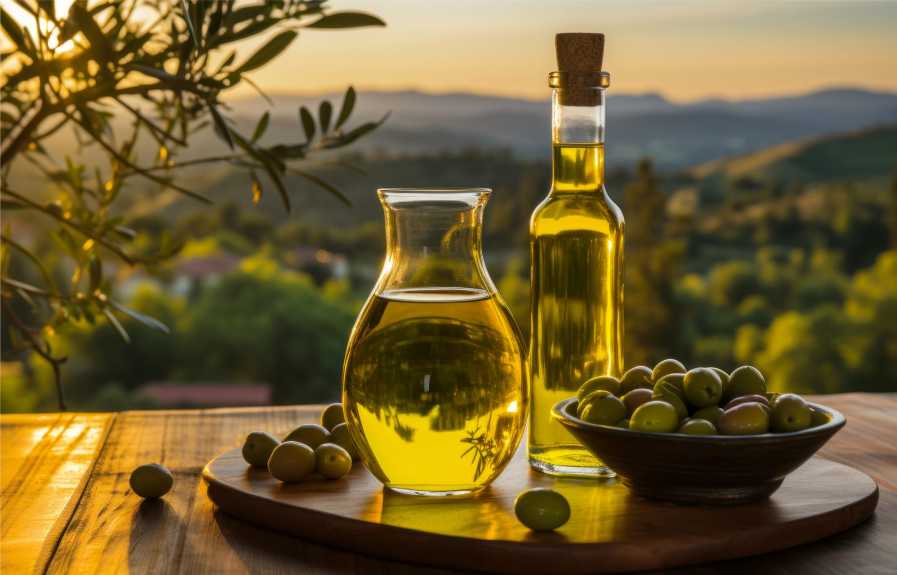
Not long ago, the idea of olive trees or almond blossoms in the English countryside sounded like wishful thinking. Yet with each passing season, that image feels less like fantasy and more like a preview of what could come. While it’s still early, southern England is showing the first subtle signs of a long-term agricultural shift — one that might make Mediterranean crops part of Britain’s future.
A Slow but Steady Transformation
Climate data tells a quiet story: southern
counties such as Surrey, Kent, and Sussex are getting warmer, drier, and
sunnier. The growing season is lengthening, and frost events are becoming less
frequent. While this doesn’t mean Britain will suddenly turn into Tuscany, it
does suggest that some Mediterranean species could soon thrive here — with
the right approach and patience.
Experimental olive trees planted over a decade
ago as ornamental features are now bearing small clusters of fruit. A few
vineyards that once struggled for ripeness now achieve consistent harvests.
Lavender, figs, and even pomegranate bushes are appearing in sheltered corners
of southern gardens. These are early indicators, not guarantees — but they’re enough
to make farmers and investors pay attention.
Why This Matters for the Future of Farming
If temperature patterns continue along their
current trajectory, Britain’s agricultural map will gradually expand southward
and upward in diversity. Crops once considered “too exotic” may start to
complement traditional British produce.
This shift wouldn’t happen overnight — it
could take another 10 to 15 years for olive cultivation or almond
production to reach commercial scale. But early investment in knowledge, soil
preparation, and pilot planting could yield significant advantages when the
climate and policy frameworks align.
For now, the goal isn’t to replace British
farming traditions, but to enrich them — blending resilience with
innovation.
The Opportunity for Forward-Looking Investors
Investors who understand the long-term nature of
agricultural cycles know that waiting can be as powerful as acting. Identifying
adaptable land, studying soil profiles, and developing water management systems
today could position them ahead of the curve when Mediterranean crops become
commercially viable in Britain.
This kind of investment isn’t speculative — it’s
strategic. It’s about anticipating climate reality rather than reacting
to it.
Platforms like InvestAgrolidya are
exploring how these future-oriented projects could evolve — from pilot olive
groves in Surrey and Kent to educational collabourations with horticultural
researchers studying temperature thresholds and varietal resilience.
Challenges Remain — and They Matter
It’s important to stay realistic.
Humidity levels, unpredictable frost, and soil composition still pose
challenges. Olive and almond trees need dry roots, sunlight, and long summers —
conditions the UK only partially meets. Insurance mechanisms, protected
cultivation systems, and region-specific training will all play a role in
turning potential into performance.
But agriculture has always been about timing —
knowing when to plant and when to prepare. And right now, preparation may
be the smartest move.
A Glimpse of What’s Possible
When olives appeared in Surrey gardens for the
first time, it wasn’t about immediate profit — it was about possibility. The
same quiet transformation could redefine parts of England’s rural economy over
the coming decades.
Farmers who once depended solely on livestock
might one day cultivate high-value niche crops. Investors who enter early could
help shape a new segment of British agriculture that connects sustainability,
climate adaptation, and innovation.
The seeds are already in the ground. The question
is how — and when — they’ll grow.