Featured Snippet Target Intro
Is Broiler Farming Profitable in 2026?
Yes. Broiler farming is considered one of the most profitable sectors within modern agriculture due to strong global demand for poultry meat, efficient production cycles, and scalable industrial farming systems.
A modern broiler production facility can operate 6–7 production cycles per year, producing millions of birds annually. With consistent demand for chicken as an affordable protein source, broiler production continues to attract investors looking for stable food production assets.
Key factors that make broiler farming profitable include:
- Short production cycles (35–40 days)
- High feed conversion efficiency
- Strong global demand for poultry meat
- Contract production models that reduce market risk
- Industrial-scale production platforms
Because of these advantages, poultry production is increasingly viewed as a strategic food infrastructure investment rather than just a traditional agricultural activity.
What Is Broiler Farming?
Broiler farming refers to the commercial production of chickens raised specifically for meat consumption. Broiler chickens are bred to grow quickly and efficiently, typically reaching market weight within five to six weeks.
Modern broiler production operates within a structured supply chain that includes breeding companies, hatcheries, contract growers, processing plants, and distribution networks.
Unlike traditional livestock farming, broiler production relies heavily on automation, data monitoring systems, and integrated supply chains. These features allow producers to achieve highly efficient protein production.
Today, broiler farming has become one of the most advanced segments of the global agricultural industry.
To maximise these returns with a professionally managed facility, you can explore our turn-key chicken farm investment opportunities in Turkey.
Why Poultry Is the Fastest Growing Meat Sector
Over the past decades, poultry consumption has increased dramatically worldwide. In many countries, chicken has surpassed other meats as the most consumed animal protein.
Several reasons explain this trend.
Affordability
Chicken remains one of the most affordable sources of animal protein. Compared to beef or lamb, poultry production requires fewer resources and therefore results in lower retail prices.
Production Efficiency
Broiler chickens convert feed into meat more efficiently than most livestock species. Producing one kilogram of chicken meat typically requires around 1.6 kilograms of feed, while pork requires roughly 3 kilograms and beef can require 7 kilograms or more.
Short Production Cycles
Broilers reach processing weight in approximately 35–40 days, allowing farms to operate multiple production cycles per year.
Consumer Preference
Consumers increasingly prefer poultry because it is lean, versatile, and widely available.
These advantages have positioned poultry as one of the most important protein sources in the global food system.
Global Demand for Poultry Meat
Global poultry demand continues to rise as population growth and urbanization increase the need for affordable protein.
According to agricultural industry reports, global demand for poultry is expected to grow steadily over the coming decades.
By 2050, the world population is projected to approach 10 billion people, significantly increasing demand for food production systems that can deliver high volumes of protein efficiently.
Poultry production is uniquely positioned to meet this demand because of its scalability and efficiency.
For investors, this means broiler production operates in a market with strong long-term demand fundamentals.
How the Contract Broiler Farming Model Works
Most commercial broiler farms operate under a contract production model.
In this system, a poultry integrator company coordinates the supply chain while contract growers operate the production facilities.
Typically, the integrator provides:
- Day-old chicks
- Feed
- Veterinary services
- Technical supervision
- Processing and marketing
The grower provides:
- Poultry houses
- Infrastructure
- Labor
- Facility management
This structure allows producers to focus on efficient production while the integrator manages product sales and market distribution.
The contract model significantly reduces market risk and stabilizes production planning.
How Much Can Broiler Farms Produce?
Production capacity varies depending on farm size, technology, and number of poultry houses.
A single broiler house can typically hold 20,000 to 50,000 birds depending on the system used.
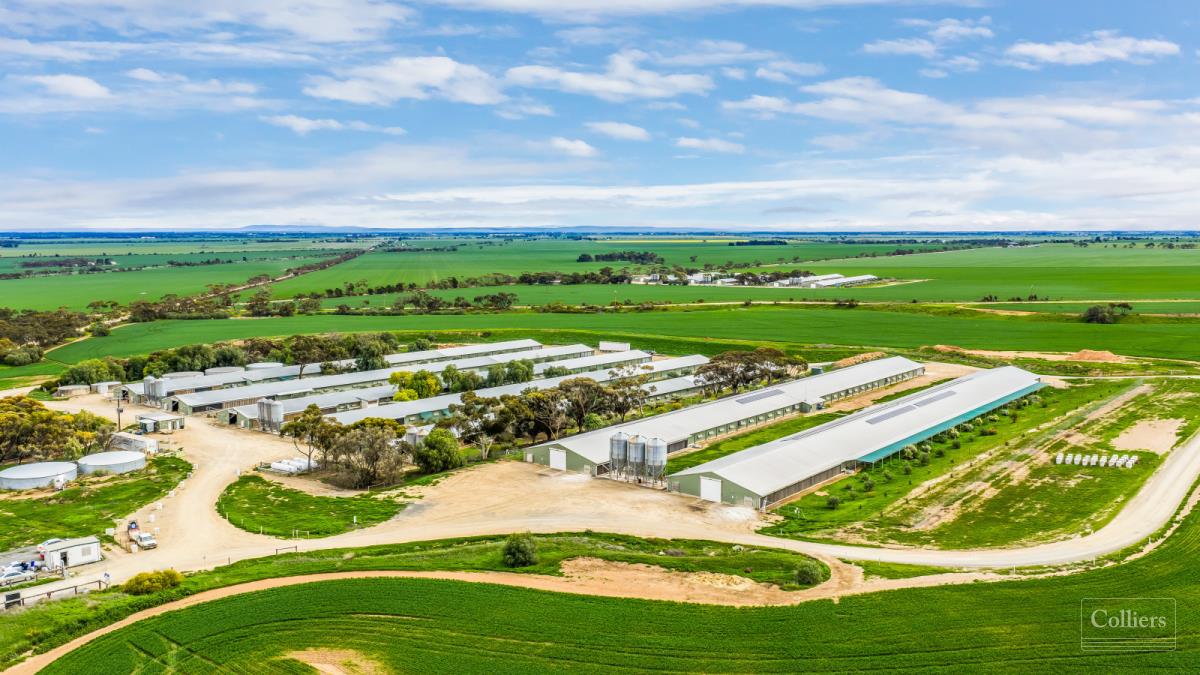
Industrial broiler production platforms combine multiple houses within a centralised agricultural site.
For example, a large integrated broiler production platform may include:
- Hundreds of production units
- Millions of birds per production cycle
- Multiple cycles per year
Such platforms can produce tens of millions of broilers annually, making them significant contributors to regional food supply.
Broiler Production Cycles Explained
One of the most important factors affecting broiler profitability is the production cycle.
A typical broiler production cycle includes:
Chick Placement
Day-old chicks are placed into the broiler house with controlled temperature and fresh bedding.
Growth Phase
Over the next five weeks, chickens grow rapidly with controlled feeding, ventilation, and environmental management.
Harvest
Once birds reach the required market weight, they are transported to processing facilities.
Cleaning and Preparation
The poultry house is cleaned and disinfected before the next batch of chicks arrives.
Modern facilities typically operate 6 production cycles per year, with the potential to reach 7 cycles under optimised conditions.
Why Industrial Poultry Platforms Are Attractive Investments
Traditional broiler farms often operate as individual facilities. However, recent industry trends favour centralised production platforms.
Industrial platforms provide several advantages:
Economies of Scale
Large platforms benefit from shared infrastructure and operational efficiencies.
Professional Management
Centralized management ensures consistent production standards.
Reliable Supply for Integrators
Large production hubs allow integrators to source significant poultry volumes from a single location.
Infrastructure Efficiency
Shared utilities, logistics, and monitoring systems improve operational efficiency.
Because of these advantages, large-scale poultry production platforms are becoming increasingly attractive to investors.
Broiler Farming as a Food Infrastructure Investment
Food production assets represent a unique category of investment.
Unlike many other industries, food demand remains stable even during economic fluctuations.
Chicken meat is considered an essential food product, meaning its consumption remains strong regardless of economic conditions.
Investing in broiler production infrastructure therefore provides exposure to a sector with:
- Stable global demand
- Essential food supply relevance
- Long-term growth potential
For this reason, many investors view poultry production platforms as strategic food infrastructure investments.
Key Factors That Influence Broiler Farm Profitability
Several factors determine the profitability of broiler farming.
Feed Efficiency
Feed is the largest cost in poultry production, making feed conversion efficiency critical.
Farm Management
Proper temperature control, ventilation, and monitoring systems significantly influence bird growth rates and survival.
Production Cycles
The number of cycles per year directly affects total production output.
Market Access
Proximity to processing plants and integrator partnerships ensures efficient supply chain integration.
Technology Integration
Automated feeding, climate control, and monitoring systems improve operational performance.
Modern broiler farms rely heavily on technology to optimize production efficiency.
The Future of Broiler Farming Investment
As global demand for poultry continues to rise, the poultry industry is expected to remain one of the most important sectors in agriculture.
Several trends are shaping the future of broiler production:
- increasing automation in poultry houses
- expansion of large-scale production platforms
- renewable energy integration in farming operations
- stronger biosecurity standards
- improved genetics and feed efficiency
These developments are making broiler production more efficient and scalable than ever before.
For investors seeking exposure to the agricultural sector, broiler production represents one of the most promising segments of the global food economy.
Broiler farming has evolved from small family operations into a sophisticated global industry capable of producing large volumes of affordable animal protein.
With short production cycles, efficient feed conversion, and strong global demand, poultry production remains one of the most scalable and resilient agricultural sectors.
As the world population grows and protein demand increases, broiler production infrastructure will play a crucial role in supporting global food security.
For investors interested in food production assets, broiler farming offers a compelling combination of efficiency, scalability, and long-term demand.
Ready to enter the agricultural sector? Learn more about the technical details of our poultry farm investment models.