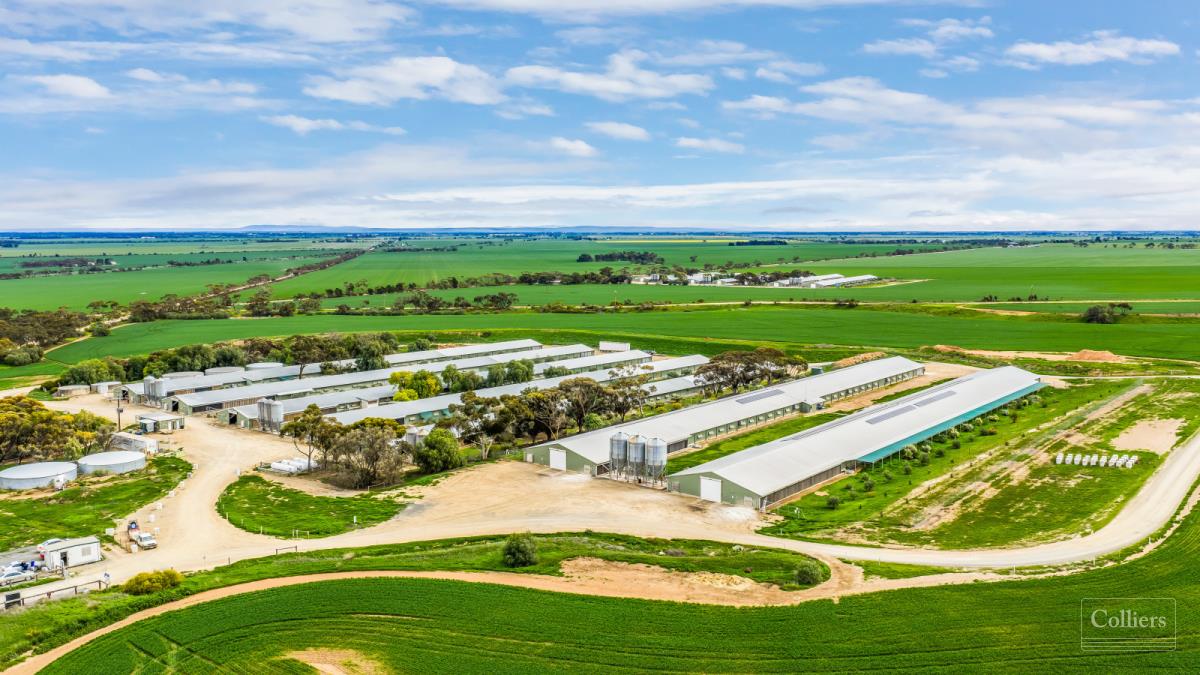
Asset Backed Agricultural Investment with Title Deed Ownership and Recurring Income from Poultry Production
In today’s global investment landscape, investors are increasingly seeking opportunities that combine stability, tangible assets, and consistent income generation. Traditional financial instruments such as stocks and bonds continue to play a role, but growing volatility and inflationary pressures have pushed investors to explore alternative asset classes. One of the most compelling options emerging in recent years is agricultural investment, particularly when combined with real estate backed security and professionally managed operations.
Among these opportunities, poultry farm investment stands out as a highly scalable and demand driven model. It offers a unique combination of land ownership, structured production, and recurring income. When designed correctly, it becomes an asset backed agricultural investment that aligns with long term wealth preservation while also generating steady returns.
Understanding Agricultural Investment
Agricultural investment refers to the allocation of capital into farming operations, land development, and food production systems. Unlike speculative investments, agriculture is rooted in real world demand. Food consumption is constant, population growth continues globally, and supply chains rely heavily on efficient production systems.
Investors are drawn to agriculture because it provides a tangible asset base. Land, infrastructure, and production facilities all hold intrinsic value. This reduces exposure to purely market driven volatility and creates a more grounded investment profile.
Within this space, poultry production has become one of the most efficient and commercially viable sectors. Chicken is one of the most consumed protein sources worldwide, making poultry farming a stable and scalable business model.
What Makes Poultry Farm Investment Attractive
Poultry farm investment is built on a simple principle. Instead of managing the farming operation directly, investors participate by owning production units that are operated by professionals. This transforms what would traditionally be a complex agricultural activity into a passive income investment.
The demand side of poultry production is extremely strong. Global consumption of chicken continues to rise due to affordability, accessibility, and dietary preferences. This ensures that production output has a ready market, especially when integrated with established supply chains.
From an operational standpoint, poultry farming is highly systematized. Production cycles are predictable, inputs are standardised, and output is measurable. This allows for structured planning and consistent revenue generation over time.
The Power of Asset Backed Investment
One of the key differentiators in this model is that it is asset backed. Investors are not simply funding an operation. They are acquiring ownership of a physical production unit, often supported by land and infrastructure.
Asset backed investment provides a layer of security that is absent in many traditional financial products. Ownership of a tangible asset ensures that the investment retains value even in fluctuating market conditions.
When combined with title deed ownership, this structure becomes even stronger. Investors hold legal ownership of their unit, which can be transferred, sold, or retained as a long term asset. This bridges the gap between agricultural investment and real estate investment.
Title Deed Ownership as a Core Advantage
Title deed ownership transforms the perception of agricultural investment. Instead of being seen as a high risk operational venture, it becomes a property backed investment with agricultural income potential.
Investors gain full legal ownership of their production unit. In cases where multiple units are acquired, ownership may extend to the entire land parcel associated with those units. This provides flexibility and control over the asset.
Ownership also enhances transparency and trust. Investors know exactly what they own, where it is located, and how it is being used. This clarity is critical in attracting serious capital and building long term confidence.
Fully Managed Investment Structure
One of the biggest barriers to entering agriculture is operational complexity. Farming requires expertise, labour management, technical knowledge, and continuous oversight. For most investors, this is neither practical nor desirable.
A fully managed investment structure eliminates this barrier. Professional teams handle all aspects of production, including planning, execution, monitoring, and reporting. Investors benefit from the output without being involved in day to day operations.
This transforms the model into a passive income investment. It allows individuals to diversify their portfolios without taking on operational responsibilities.
Recurring Income Through Production Cycles
Income generation in poultry farming is based on production cycles. Each cycle involves raising a batch of poultry, managing their growth, and delivering them to market through established channels.
These cycles occur multiple times per year, creating a recurring income stream. When managed efficiently, this structure provides predictable cash flow and aligns well with long term investment goals.
Quarterly income distribution further enhances this model. Investors receive returns at regular intervals, making it suitable for those seeking consistent income rather than long term capital appreciation alone.
Integration with Established Industry Players
A critical factor in the success of poultry farm investment is integration with established industry players. Large poultry companies provide essential inputs such as chicks, feed, veterinary services, and purchase agreements.
This integrated model reduces market risk. Production is aligned with demand, and output is secured through contractual relationships. It also ensures that operations meet industry standards and maintain consistent quality.
Partnerships with leading integrators strengthen the overall investment structure. They provide operational stability and ensure continuity in production and sales.
Risk Considerations and Transparency
Like any investment, agricultural investment carries risks. These may include environmental factors, production variability, and market fluctuations. However, structured models mitigate these risks through standardization and professional management.
Transparency plays a crucial role in building investor confidence. Regular reporting, performance tracking, and clear communication ensure that investors remain informed about their investment.
Independent audit options and cycle based reporting further enhance accountability. These mechanisms create a professional investment environment comparable to institutional standards.
Comparing with Traditional Real Estate Investment
Real estate investment has long been considered a safe and reliable asset class. It offers ownership, stability, and potential for appreciation. However, it often lacks consistent income unless actively managed.
Agricultural investment with a real estate backed structure combines the best of both worlds. Investors gain ownership of a physical asset while also benefiting from operational income.
This hybrid model offers diversification. It reduces reliance on rental markets and introduces a production based income stream. It also aligns with global trends toward sustainable and essential industries.
Why Investors Are Shifting Toward Agriculture
Several global trends are driving interest in agricultural investment. Population growth is increasing food demand. Urbanization is placing pressure on supply chains. Sustainability concerns are encouraging investment in efficient production systems.
At the same time, investors are seeking alternatives to traditional financial markets. They want assets that are tangible, productive, and aligned with long term global needs.
Agriculture meets these criteria. It is essential, scalable, and supported by real world demand. When structured properly, it becomes a compelling investment opportunity.
The Role of Technology and Efficiency
Modern poultry farming relies heavily on technology. Automated feeding systems, climate control, and data monitoring improve efficiency and consistency. These advancements reduce operational risk and enhance productivity.
Technology also enables better reporting and transparency. Investors can access performance data, track production cycles, and understand how their investment is performing.
This integration of technology with agriculture is transforming the sector. It is making it more accessible to investors and aligning it with modern investment standards.
Long Term Value and Exit Options
An important consideration for any investment is exit strategy. In this model, investors have multiple options. They can continue to generate income over time, sell their unit, or transfer ownership.
Title deed ownership provides flexibility. It allows the asset to be treated similarly to real estate. This enhances liquidity and provides additional security.
Long term value is supported by both the asset and the income it generates. This dual benefit makes it attractive for investors seeking both growth and stability.
Conclusion
Asset backed agricultural investment with title deed ownership represents a new generation of investment opportunities. It combines the stability of real estate with the productivity of agriculture and the convenience of passive income.
Poultry farm investment stands at the forefront of this model. It offers structured production, strong demand, and recurring income. When supported by professional management and industry partnerships, it becomes a highly compelling option.
For investors seeking diversification, stability, and consistent returns, this model provides a clear pathway. It aligns with global trends, leverages essential industries, and delivers tangible value.
As the investment landscape continues to evolve, opportunities that combine real assets with operational income will become increasingly important. Agricultural investment, particularly in poultry production, is well positioned to meet this demand and provide long term value for forward thinking investors.